
Why Paid Ads Are a Must-Have for Your Kickstarter Game Campaign
Key Takeaways
Kickstarter campaigns that fund quickly almost always combine paid ads with organic and press — ads are the growth engine, not an optional extra.
The 1:1 rule: your pre-launch follower count is your single best predictor of how much your campaign will raise on launch day.
Paid ads give you scale, speed, precision targeting, and real-time optimisation data that no organic channel can replicate on a deadline.
Campaigns without paid advertising have no reliable mechanism to reach new audiences, retarget warm leads, or control their growth rate.
Starting ads at least 60 days before launch gives you time to optimise creative, lower cost-per-lead, and arrive on day one with a warm audience ready to back.
The Hard Truth About Organic Reach
You've spent months designing your game. The mechanics are tight, the art is stunning, and the campaign page looks great. You go live, and nothing moves.
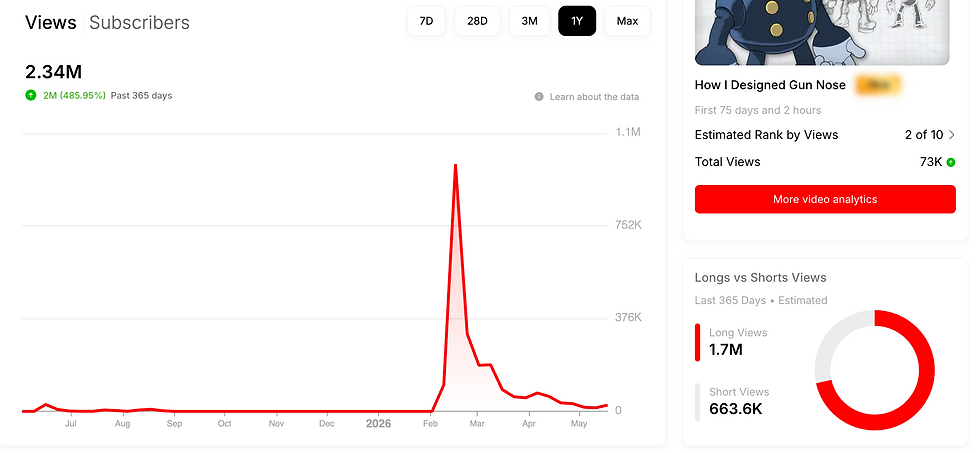
This is not a rare outcome (however, see Nose Gun example down below - succeeding without ads thanks to over a million views on YouTube!). It is the default outcome for campaigns that launch without a paid advertising strategy. Kickstarter is not a marketplace where quality automatically finds its audience.
Industry data shows that campaigns that fail to fund typically have no structured pre-launch marketing. Those that overfund almost always combine paid ads with organic, press, and community channels — with ads as the growth lever that makes the others scale.
Kickstarter does not surface great games automatically — visibility is earned or paid for.
Campaigns without a pre-launch marketing plan almost always underperform on day one.
Organic reach is too slow and inconsistent to build momentum against a fixed launch deadline.
Paid ads are the only channel that gives you direct, scalable control over your audience growth rate.
Your Follower Count Predicts Your Backer Count
Here is one of the most important benchmarks in Kickstarter game marketing: live campaigns typically convert followers into backers at roughly a 1:1 ratio across all combined channels.
FOR CLARITY: I don't mean this in the sense that if you have 500 followers, all 500 of those followers will convert into backers - no, I mean it as in if you have 500 followers, by the end of your campaign, you'd likely have close to or over 500 backers.
How the 1:1 equation works
That ratio is the aggregate of every traffic source working together:
Paid advertising (Meta, TikTok, Google)
Kickstarter internal referrals and discovery
Word of mouth from your existing community
Organic social content and community building
Press coverage and influencer features
None of these channels scales fast enough on its own. Paid ads are the lever that accelerates follower growth so all the other channels have a larger audience to compound on.
7 Reasons Paid Ads Are Essential for Kickstarter Games
1. Scale — go beyond your existing network
Your Discord, newsletter, and social following are a starting point, not a ceiling. Paid ads can place your game in front of hundreds of thousands of targeted users in days — something no organic strategy replicates on a launch timeline.
Take a look at the pre-launch followers for Tails of Fate below 👇

After their initial announcement and a few weeks later, they managed to gain over 500 followers, which seems like a fairly common follower count for a lot of Kickstarters with a moderate-size following (3,000 X followers and 1,000 followers on Instagram), but once we kicked in the pre-alunch ads, you could see the instant scale potential, gaining between 20-60 followers a day with the help of ads and posting updates of Kickstarter follower counts across social media.

Tails of Fate then decided to pause in pursuit of a publisher. After months of searching, we relaunched the ads in January, increasing again the follower count at a faster and larger scale than organic can not do.
2. Broader visibility — reach the right strangers
Organic content reaches people who already follow you. Ads reach people who have never heard of you but would back your game immediately if they saw it. Properly targeted ads turn strangers into followers, and followers into backers.
3. Speed — build momentum before you need it
Kickstarter rewards early traction. Campaigns that hit their goal quickly get surfaced more prominently by the algorithm, driving further organic discovery. Ads let you build the warm audience before launch day so you arrive with momentum already loaded.
4. Precision targeting — spend where it counts
Modern ad platforms let you reach:
Interest-based segments — tabletop gaming, specific game titles, BoardGameGeek, Dice Tower
Lookalike audiences built from your existing email list or past backers
Demographic and geographic filters aligned to your backer profile
Behavioural signals — people who have backed crowdfunding projects before
5. Retargeting — convert the warm audience
Paid ads let you re-engage people who visited your page, watched your video, or interacted with your content but did not yet follow. These warm audiences convert at significantly higher rates than cold traffic — and without ads, you have no mechanism to reach them again.
6. Real-time data and optimisation
Running ads gives you live feedback on what creative, messaging, and audience is resonating. You can A/B test hooks, visuals, and calls to action — then shift budget to what converts. This feedback loop is impossible to replicate organically and makes every other element of your campaign sharper.

Running ads on Meta for Tails of Fate allowed us to monitor ads with a positive ROAS and pause any ads that failed to generate any backers during the 30-day window.
7. Credibility through consistent presence
When potential backers see your game in their feed multiple times before launch, it builds familiarity and perceived legitimacy. A campaign they have seen before feels established — not a gamble. Ads manufacture the impression of momentum even before momentum exists.
|
What Happens to Campaigns That Skip Paid Ads
Without advertising, your campaign depends entirely on:
Organic social content — seen only by people already following you
Word of mouth — slow, uncontrollable, impossible to scale
Press and influencer coverage — high effort, no guaranteed reach or timing
Kickstarter discovery — limited without existing traction to trigger the algorithm
The result is predictable:
Slow pre-launch follower growth — you arrive on launch day without the audience you need
No new audience acquisition — you speak to the same room, which never gets bigger
Weak launch-day momentum — slow starts signal underperformance to Kickstarter's algorithm, reducing organic discovery
A compounding deficit — fewer backers means less social proof, which means fewer backers still
⚠️ The Real Risk of Going Ad-Free Skipping paid ads means betting your campaign on organic virality — which statistically happens to a fraction of a percent of projects. That is not a strategy. It is a lottery ticket. |
Some games can be successful without ads, but it's a rarity

As I mentioned at the top, Nose Gun by Addy Valentine is a very rare example of a game that skipped on ads, but found huge success when announcing the new Kickstarter trailer on YouTube, the same day as launching on Kickstarter. Thanks to the large volume of views on YouTube, and the algorithm surge, gaining 1 million views on launch week and raising over $175k in 7 days from over 4,000 backers.

How Paid Ads Amplify Every Other Channel
Paid ads do not replace your other marketing activity — they make everything else perform better. Here is how the ecosystem connects:
Channel | How Ads Make It Better |
Kickstarter algorithm | More followers = higher early traction = more platform-driven discovery |
Word of mouth | A larger community means more people sharing — growth compounds |
Press coverage | Journalists and influencers take notice of campaigns with visible traction |
Email marketing | Ads build your email list pre-launch — your highest-converting channel on day one |
Organic social | Retargeting converts warm audiences generated by organic content and press |
Section Summary
|
Frequently Asked Questions
Do I need paid ads to run a successful Kickstarter game campaign?
Not technically — but the data strongly suggests you should. Campaigns without advertising rely entirely on organic reach, word of mouth, and press, all of which are slow and unpredictable. Paid ads give you direct control over your follower growth rate, which is the single biggest predictor of day-one funding performance.
When should I start running ads?
At least 60 days before your launch date. Pre-launch ads build your follower count and email list — the warm audience you convert into backers on day one. Starting earlier gives you time to test creative, optimise targeting, and lower your cost per lead before you go live.
Which platform works best for Kickstarter game campaigns?
Meta (Facebook and Instagram) is the most proven platform for tabletop campaigns, thanks to its interest-based targeting and lookalike audience tools. TikTok is growing rapidly for visually compelling games and younger demographics. Google Ads captures high-intent search traffic. Most successful campaigns run a combination.
How much should I budget for ads?
Budget varies by game, target audience size and how much you want to raise, but a practical starting point is £500–£2,000 for pre-launch audience building, scaling during the live campaign. Industry benchmarks suggest targeting a ROAS (return on ad spend) of 5x or higher to ensure your investment is profitable relative to pledges.
Launching your game on Kickstarter?
Full Charge helps indie developers build the audience, strategy, and ads needed to launch funded campaigns.
Get in touch at fullcharge.games — the earlier you start, the better your launch.


